
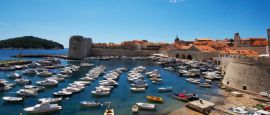

Croatia Weather, climate and geography
Weather & climate
Croatia can be visited year-round, although the best time depends largely on the region and type of trip. The Adriatic coast has a Mediterranean climate, with hot, dry summers and mild, wetter winters, while Zagreb and the continental interior experience colder winters and warm to hot summers. Mountain areas are cooler and can receive substantial snowfall in winter.
June to September is the main season for beach holidays, sailing and island visits, with July and August the hottest, busiest and most expensive months along the coast. May, June, September and early October are particularly good for sightseeing, walking and exploring the national parks, with generally warm weather and fewer visitors than at the height of summer.
Spring (March to May) and autumn (September to November) are also good times for visiting Zagreb and inland Croatia. Winter (December to February) is quieter on the coast, when some hotels, restaurants and ferry services operate reduced schedules, while Zagreb remains a year-round city-break destination. Snow in the mountains creates opportunities for winter sports and other cold-weather activities.
Lightweight clothing, swimwear, sunglasses and sun protection are recommended for the Adriatic coast in summer, with comfortable footwear for cobbled streets and walking trails. A light jacket or sweater is useful for cooler evenings and boat trips.
In spring and autumn, layers and a waterproof jacket are advisable as temperatures and rainfall can vary considerably. Warm clothing, a waterproof outer layer and sturdy footwear are needed in winter, particularly in Zagreb, the continental interior and mountain areas. Visitors planning to hike should carry suitable footwear and additional layers even in warmer months, as conditions at higher elevations can change quickly.
Geography
Croatia lies at the meeting point of Central and southeastern Europe and the Mediterranean. It is bordered by Slovenia to the northwest, Hungary to the northeast, Serbia to the east, Bosnia and Herzegovina to the south and east, and Montenegro at the southern end of the Adriatic coast. Its distinctive crescent-shaped territory extends from the fertile plains of the Pannonian Basin in the northeast to a long, deeply indented coastline on the Adriatic Sea.
The country's landscape falls broadly into three geographical regions. Northern and eastern Croatia consist largely of lowlands and rolling countryside, including the fertile plains of Slavonia between the Drava, Sava and Danube rivers. Central Croatia becomes increasingly hilly and mountainous, with the Dinaric Alps forming a rugged limestone barrier between much of the interior and the Adriatic coast.
The coastal region stretches from the Istrian peninsula in the north through Kvarner and Dalmatia to Dubrovnik in the south. Offshore lie more than 1,000 islands, islets and reefs, although only a small proportion are permanently inhabited. The largest islands include Cres and Krk, while Brač, Hvar, Pag, Korčula and Mljet are among the best known to visitors.
Limestone dominates much of the Dinaric and coastal landscape, producing classic karst features such as caves, sinkholes, underground rivers and steep rocky gorges. Water flowing through this porous terrain has also helped create some of Croatia's most distinctive natural landscapes, including the lakes and waterfalls of Plitvice and Krka.
Croatia's highest point is Dinara, at 1,831m (6,007ft), near the border with Bosnia and Herzegovina. The country's climate varies markedly with geography: the Adriatic coast has a Mediterranean climate with hot, dry summers and mild, wetter winters, while the interior has greater seasonal contrasts, including cold winters and warm to hot summers. Mountain areas are cooler and receive substantial snowfall in winter.
Do you have any Feedback about this page?
© 2026 Columbus Travel Media Ltd. All rights reserved. No part of this site may be reproduced without our written permission, click here for information on Columbus Content Solutions.



 You know where